
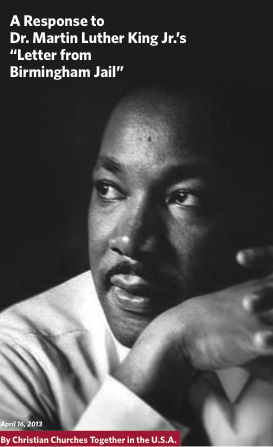
Responding to Dr. King’s Famous Letter - 50 years later
In January 2011, members of Christian Churches Together met in Birmingham to examine issues of domestic poverty and racism through the lens of the civil rights movement and by reading together Martin Luther King Jr.'s "Letter from Birmingham Jail." As they gathered in the 16th Street Baptist Church under the Wales Window portraying the black Christ, which replaced the window blown out when the church was bombed in 1963, these leaders realized that apparently no clergy had ever issued a formal response to King's famous letter, even though it was specifically addressed to "fellow clergymen." In 2013, to mark the 50th anniversary of King's letter, CCT released the response below. (See also, the Sojourners article on the statement at: https://sojo.net/magazine/april-2013/we-dare-not-postpone-action)
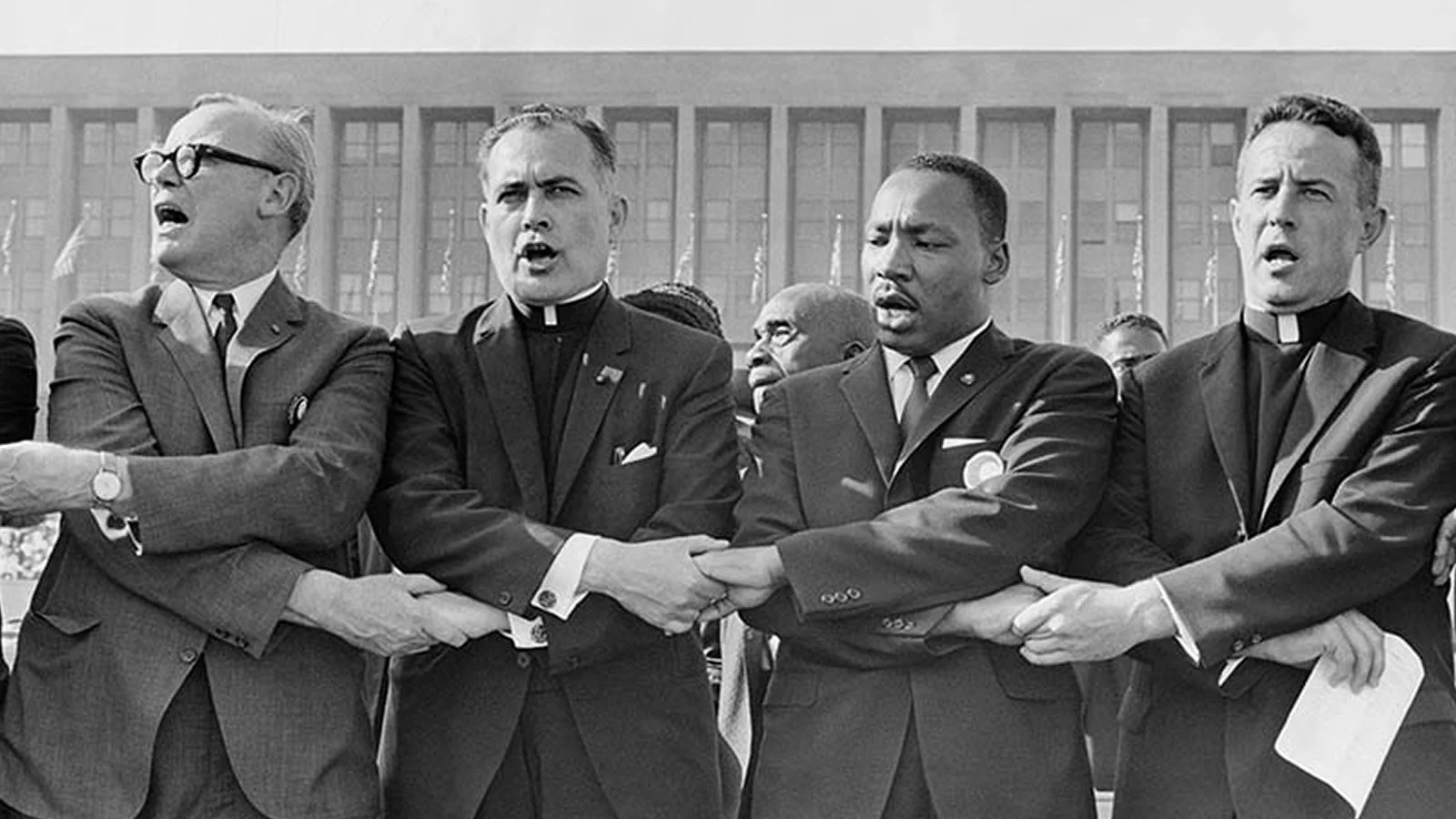
Pictured: The Baptist minister, Rev. Dr. King, linking hands with Catholic priests in 1964.
50th Anniversary Study Guide
In addition to the above response, Christian Churches Together leaders created a study guide on Dr. King’s “Letter from Birmingham Jail” as a tool for American Christians—to re-invigorate, or in many cases initiate, a conversation about the present reality of racism in church and society. The hope is that these conversations may move God’s people to take action in their own context to address the sin of racism and its ramifications.
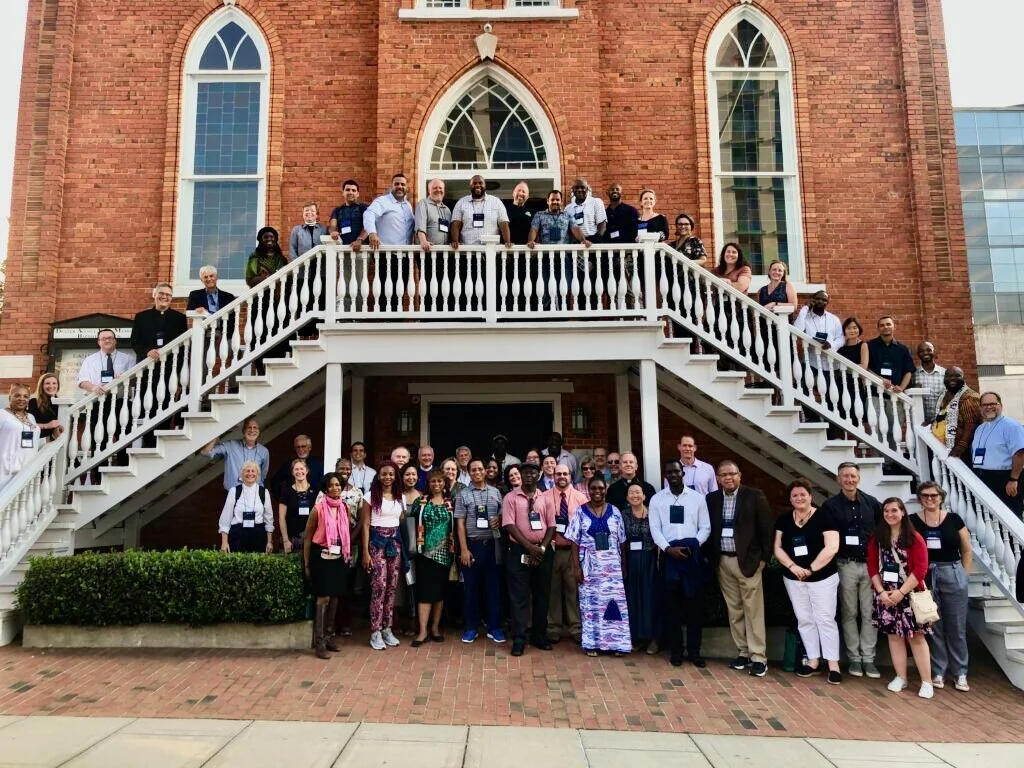
Pictured: CCT participants in front of Dexter Ave. Baptist Church in Montgomery, where Dr. King served as pastor, 1954-1960.
The Impetus for the Study Guide
In addition to their experience in Birmingham in 2011, further impetus for the study guide on Dr. King’s letter aslo came from the 2012 CCT convocation in Memphis, where Participants together drafted a document titled One in Christ for the Sake of All (see below). This call to action—in addition to leading to the creation of the above resource—urges U.S. churches to:
1. Examine their participation in the structures and personal choices that ignore the reality of poverty and perpetuate the effects of racism.
2. Embrace one or more of the initiatives from the CCT Statement on Poverty as a church wide priority which seek the elimination of poverty in this nation.
3. Partner with another church who is representative of being an “unlikely partner” in our anti-poverty work, so that our common witness may be to the God who reconciles us in Christ.
4. Proclaim publicly, in their own ways and in alliances of joint action, that the new forms of racist and unChristian behavior toward the immigrant, the impoverished and the non-Christian are abhorrent to God and a denial of the grace which God in Christ Jesus offers to everyone.
5. Seek ways to collaborate in their anti-racism and cross-cultural ministries and to share their resources and experiences in this work with each other and, as appropriate, with multi-religious partners.
6. Be mutually accountable to each other by regular reporting of their actions on these recommendations through a forum identified by Christian Churches Together.